If your park home has felt like an oven during the recent UK heatwave, you’re not imagining it. A lot of homeowners tell us the same thing: “It’s cooler outside than it is inside.” The frustrating part is that fans and open windows often feel like they’re only taking the edge off, not solving the problem.
At Prestige Developments, we’re known for refurbishment work like re-cladding, insulation upgrades and roof systems, and one of the most common patterns we see on real homes is this: park homes can heat up (and cool down) much faster than traditional brick houses. That doesn’t mean you’re stuck with it. It just means the building behaves differently, and the fix needs to be approached in the right order.
This guide breaks down why park homes overheat faster, what symptoms to look for, and the practical upgrades that can improve comfort in summer without creating condensation or damp issues later.
The short version: park homes swing in temperature faster
Brick houses have a lot of thermal mass. They absorb heat slowly and release it slowly. Park homes, especially older ones, are typically lighter structures with different wall build-ups, different insulation histories, and different ventilation realities.
That combination often leads to:
- Faster heat gain when the sun hits the exterior
- Rooms that feel stuffy and “trapped” in the afternoon
- Bedrooms that stay uncomfortable into the evening
- Big temperature swings between day and night
Let’s unpack what’s actually happening.
5 reasons why Park Homes heat up faster
1) Lighter construction = less thermal mass (so heat moves faster)
A brick house can act like a buffer. When the outside temperature spikes, the brickwork doesn’t instantly pass that heat through to the inside. It absorbs some of it, and the internal temperature changes more gradually.
Many park homes don’t have that same buffering effect. The structure is lighter, and the wall build-up is typically thinner. In a heatwave, that can mean the home responds quickly to external conditions.
What it feels like in real life:
- The home warms up quickly in the morning
- By midday, some rooms feel significantly hotter than others
- In the evening, the home can still feel warm even when the outside air has cooled
This is why “just open the windows” doesn’t always work. If the structure is gaining heat quickly, you’re fighting a constant inflow.
2) Thin or tired wall build-ups (and insulation that’s past its best)
A lot of older park homes either have minimal insulation, or they have insulation that simply isn’t performing as intended anymore. Over time, insulation can settle, get damaged, become patchy, or be compromised by moisture.
One of the biggest mistakes we see is assuming you know what’s inside the walls based on what the home should have. In practice, two homes of the same age can be completely different internally.
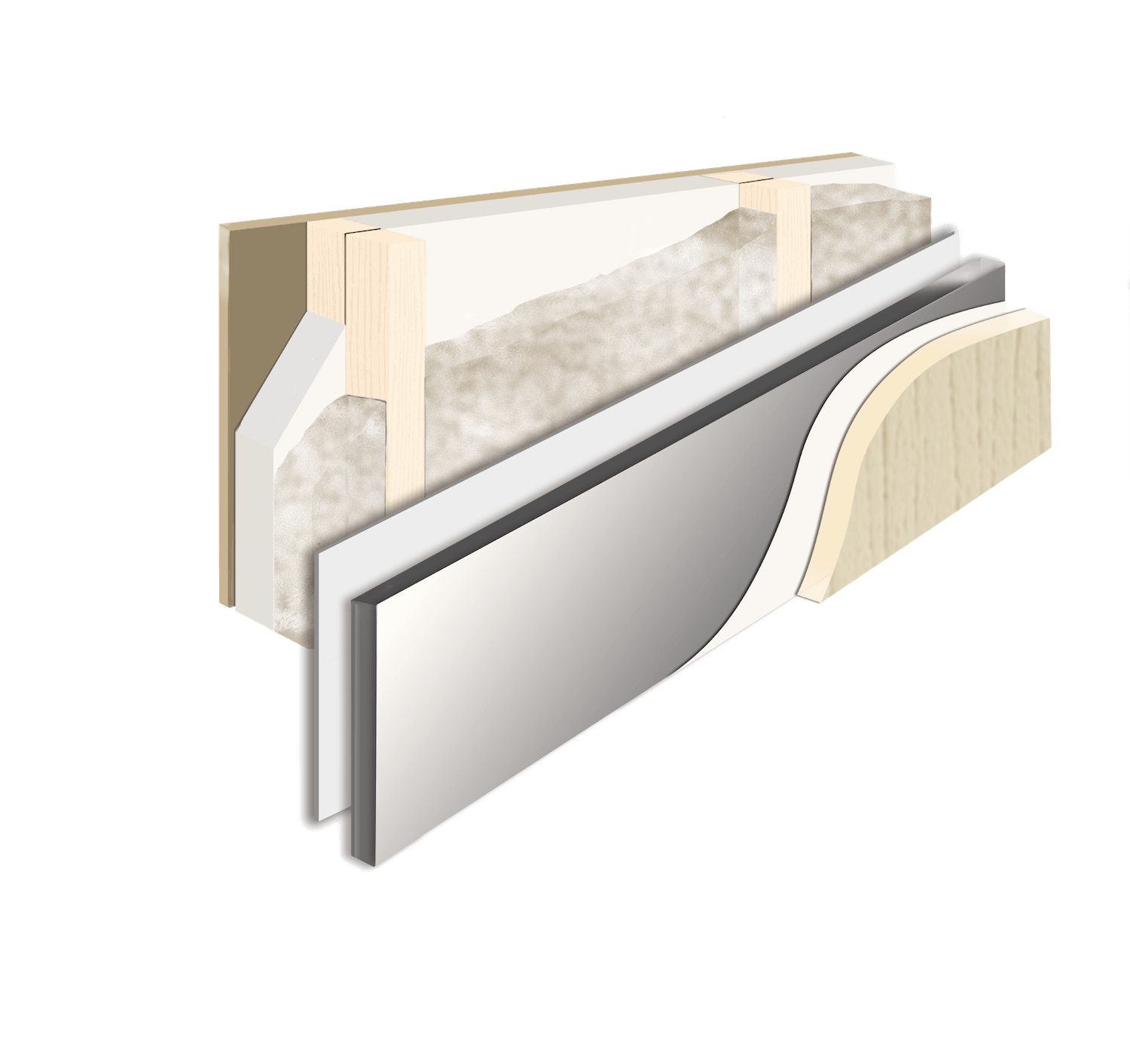
That’s why, on many insulation and re-cladding jobs, we’ll remove the existing wall covering to expose the stud structure. It’s the only way to properly assess:
- The condition of the timbers
- Whether insulation is missing, compressed or degraded
- Whether there are signs of moisture issues
- Whether the wall build-up is likely to trap moisture if you add more insulation
Why this matters for summer comfort: insulation isn’t just a winter thing. Insulation slows heat transfer both ways. If your walls are under-insulated (or unevenly insulated), the home can take on heat quickly during the day.
3) Ventilation paths aren’t always doing what you think
When it’s hot, it’s tempting to think the solution is to “seal out the heat.” But if the structure and ventilation aren’t right, you can end up with a home that’s uncomfortable in a different way: stuffy, humid, and harder to cool down.
This is where park homes can be a bit unforgiving. If insulation is installed without considering ventilation and moisture movement, you can create conditions where:
- Warm air is trapped
- Moisture has fewer escape routes
- Condensation risk increases (especially when nights cool down)
At Prestige, we often say: the method matters as much as the material. The goal is to improve comfort without sealing problems into the structure.
If you’ve already got signs like condensation on windows, mould spots, or musty smells, that doesn’t automatically mean “don’t insulate.” It means the upgrade needs to be planned properly.
4) The roof can act like a heat amplifier
In a heatwave, the roof is one of the biggest contributors to overheating. Roof surfaces can get extremely hot in direct sun, and that heat can radiate down into the rooms below.
Even if your walls are reasonable, a roof space that’s effectively acting like a heat store can make bedrooms and living areas uncomfortable.
Our general approach: roof insulation can help, but it needs to be done carefully. In many cases it’s best considered alongside a roof upgrade so the roof is treated as a complete system:
- Covering
- Ventilation
- Insulation
- Moisture control
Done properly, it improves comfort without increasing condensation risk.
5) Underfloor issues: draughts and uneven comfort
Overheating isn’t always “just heat.” A lot of park home comfort complaints are really about instability: some rooms are hot, some are draughty, and the home never feels consistently comfortable.
If you’ve got cold floors in winter, or persistent draughts year-round, underfloor insulation can be one of the most noticeable upgrades.
We generally favour rigid solid-core insulation board systems securely fixed and sealed, because they tend to be more durable and effective than underfloor “blanket” systems that rely heavily on staples and taped joints.
In summer, underfloor insulation won’t magically make a home cold, but it can help stabilise comfort and reduce that “always a bit uncomfortable” feeling that comes from air movement and uneven temperatures.
Common signs your park home is overheating due to the structure
If any of these sound familiar, there’s a good chance the issue is structural (not just “it’s hot outside”):
- Bedrooms become uncomfortable early and stay warm late
- Rooms heat up quickly when the sun hits one side of the home
- The home feels stuffy even with windows open
- You notice big day/night temperature swings
- You’ve got condensation, mould, or damp patches alongside comfort issues
- Fans help a bit, but the home still feels like it’s holding heat
What actually helps (and what usually doesn’t)
What usually doesn’t fix it long-term
-
- More fans: fans move air, but they don’t stop heat entering through the structure.
- Portable AC without addressing the building: it can help, but it’s often treating the symptom and can be expensive to run.
- Quick insulation “over the top” installs: if you insulate directly over the existing wall, you will trap moisture in the cavity. Resulting in damp and mould, which usually travels into the home.
What tends to help the most
- A proper assessment of the wall build-up and condition
- Targeted insulation upgrades (walls, underfloor, roof, in the right order)
- A method that supports correct ventilation and moisture control
- Upgrading the exterior system where needed (re-cladding/coating) to bring performance and finish up to modern standards
A practical, low-stress next step
If your park home is overheating quickly, the best first step is usually a quick assessment to work out whether walls, underfloor, roof (or a combination) is the main culprit.
At Prestige, we focus on solutions that improve comfort without creating problems later, especially around condensation and damp. That’s why we often recommend checking the structure properly before specifying a system.
If you’d like to talk it through, get in touch for a no-obligation chat and we’ll point you in the right direction based on your home, your symptoms, and what you want to achieve.